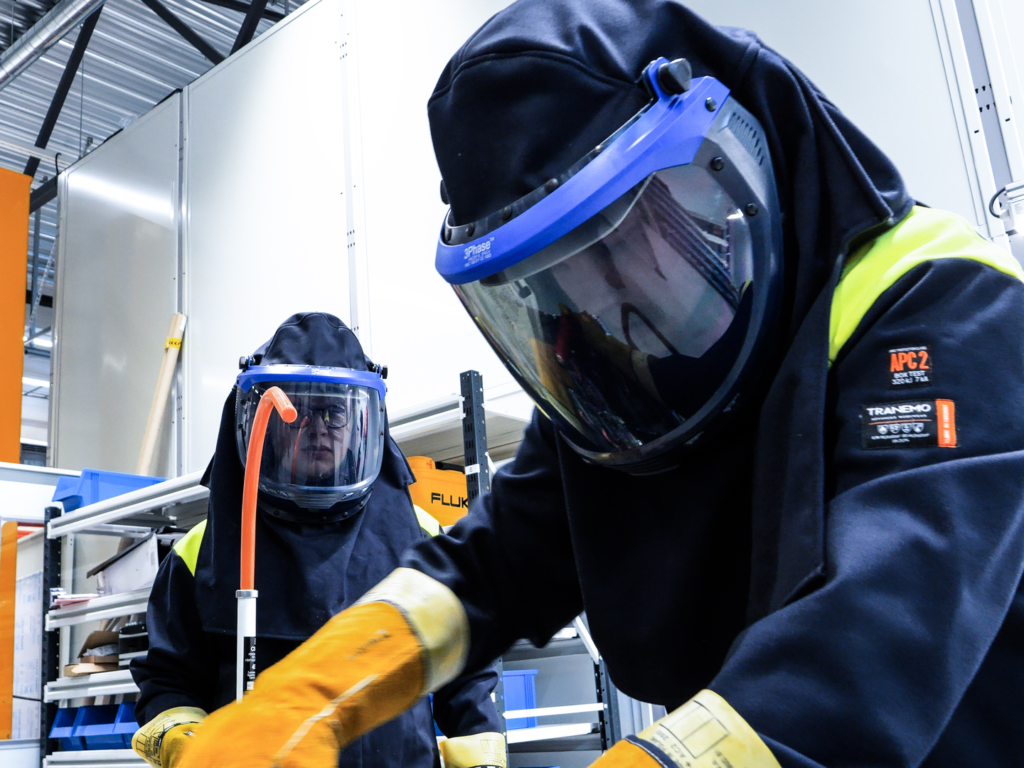
Dedicated to designing the right battery system: Proventia experts make electrification easier
New powertrains open new possibilities. But the future of off-highway machines is not about making everything electric. It is about finding the right technology for each application.
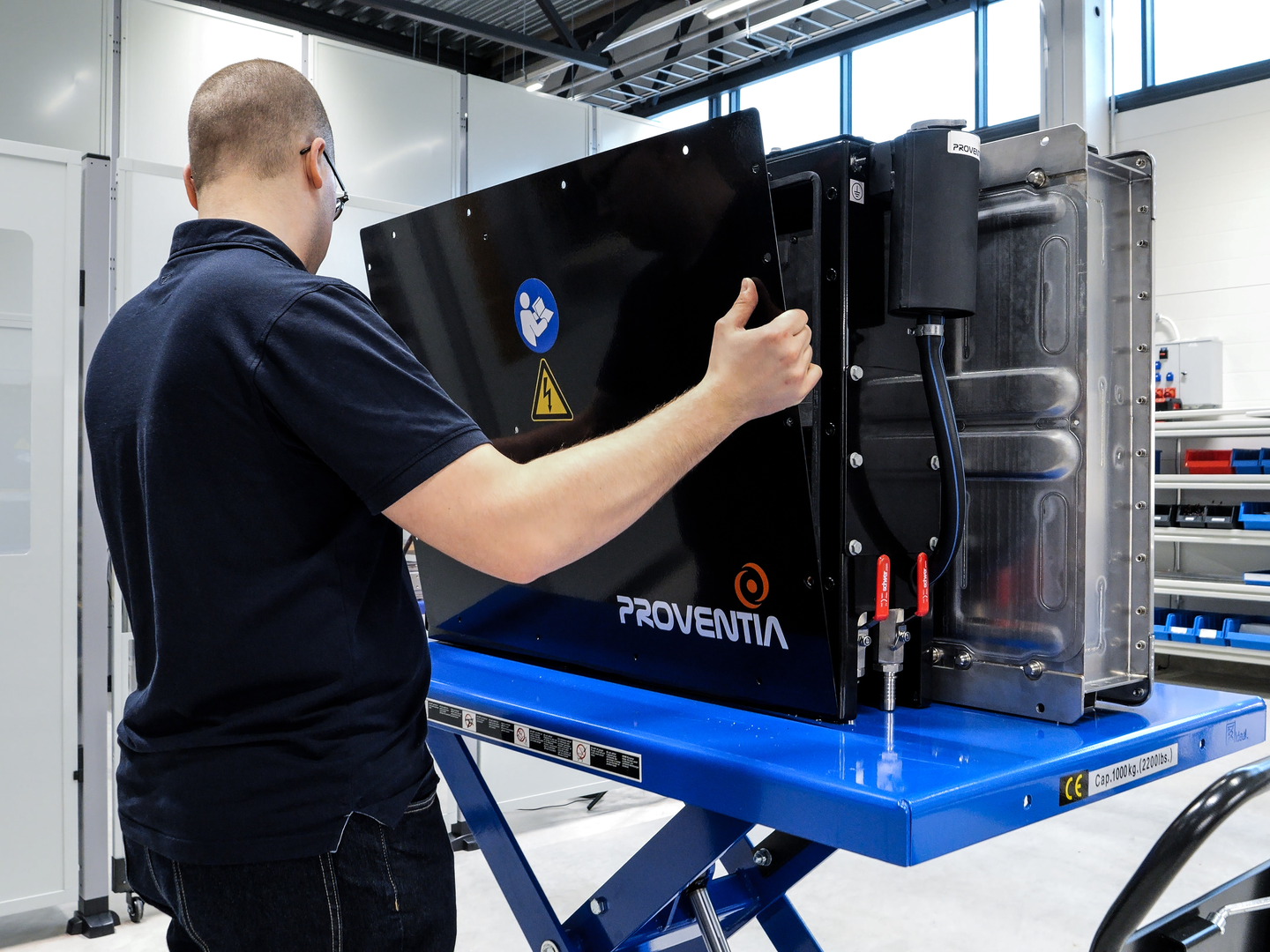
In some cases, hybridization or electrification can improve performance, efficiency, and usability. In others, different solutions make more sense. The real value comes from understanding where electrification creates measurable benefits and where it does not.
At the heart of Proventia’s electrification projects is the team: Jari Granath, who listens to customers and their challenges and responds with a plan. Jaakko Kaakinen knows batteries, where to fit them, and how to test everything. And Olli Kantola is the integration expert who knows the entire electric or hybrid powertrain inside and out. If anyone can answer a few questions about electrification, it’s them.
1. Does electrification fit all?
Here the team answers with a resounding “No!”. As interesting as it is to engineer cool solutions, they don’t do it for the sake of doing something new.
“The reality is that while technology enables better and better solutions, hybridization still adds complexity and cost,” Jari Granath says. “The countermeasure is simplification, which enables better cost efficiency.”
Jaakko Kaakinen is also very clear: “The usefulness of hybridization or electrification is very much tied to the specific application: the typical working cycle, available space, weight and so on,” he says. “In the optimal case, the result has better performance and usability than the original while being economically viable.”
2. Who benefits from hybridization or electrification?
From Proventia’s point of view, hybridization can be a good fit for many different applications.
“It’s not so much a certain machine but a predictable work cycle,” says Jari. “Typically, a need for moderate average power combined with momentary load peaks, such as in excavators, wheel loaders and harbor cranes.”
Olli Kantola gives an example from forestry: if the harvest operator makes a wrong move and overloads the engine at low RPM, the machine stalls. This is not the case with hybrid powertrains.
”When the electric motor really kicks in, the operator has fast-responding torque at their disposal,” he says. “It’s rewarding to see how much more efficiently the machine can work compared to a conventional powertrain.”
Full electrification, on the other hand, is best suited to applications where the duty cycles, operating environment, and charging opportunities support it. “If the machine operates in a controlled environment, has access to charging infrastructure and the energy demand matches what today’s battery technology can provide, the benefits can be significant.”
“The question is never whether a machine should be electric, hybrid or conventional. The question is which solution creates the most value for the customer,” he says.
“We can supply battery systems, help with powertrain design, or take responsibility for the entire integration project,” Jari explains. “The level of support depends on what the customer needs. Our role is to help them find the most effective solution, not to push a specific technology.”
3. What are the electrification pitfalls?
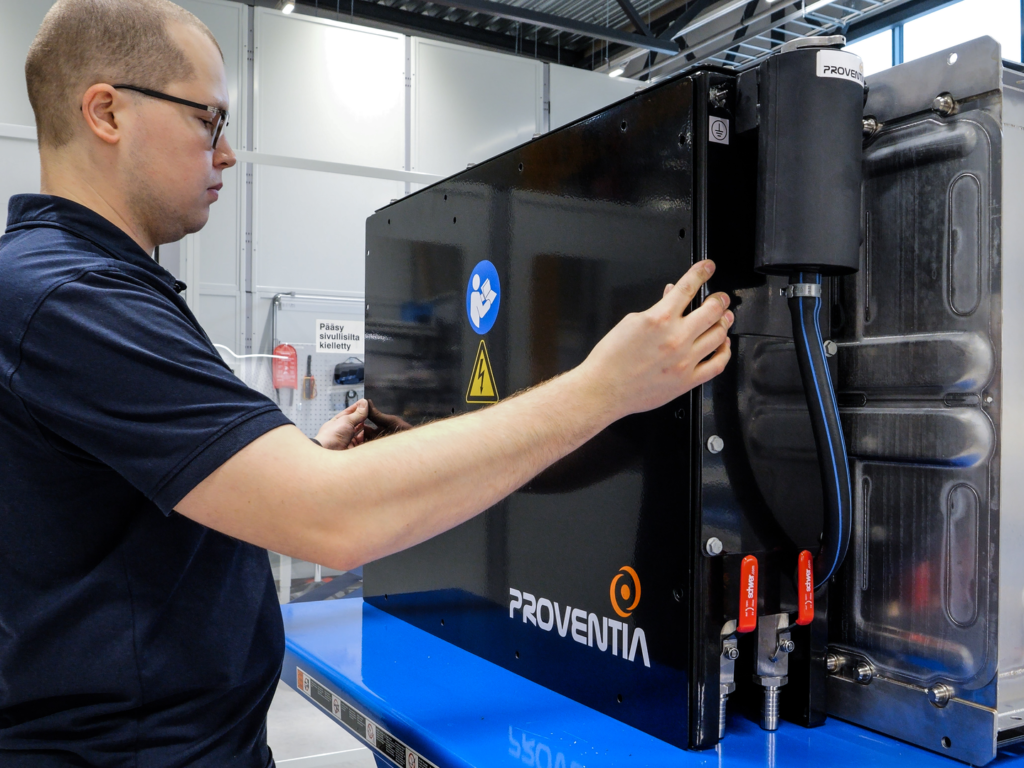
Customers who need a smooth electrification project come from very different situations. Some are already in the third generation of electric or hybrid powertrains; some are just exploring the possibilities. The team roots for modular control systems that enable configuration changes as new options become available. They also agree that the best way to avoid pitfalls is to discuss the goals and constraints early on with the team.
“Our customers come from very different situations,” Jari explains. “Some are looking for a battery system that integrates seamlessly into their own design. Others need support with hybridization or electric powertrain engineering. And some prefer a complete turnkey solution. We adapt our role to what creates the most value for the customer.”
When it comes to batteries, a pitfall to avoid is selecting the battery technology and sizing without fully understanding the machine and its real-world operation. How the machine is used, charged, and discharged has a major impact on the outcome. If these factors are not properly considered, the result can be an unnecessarily expensive battery system, lower-than-expected performance, or reduced battery life.
4. Why Proventia?
Whether the need is for a cost-effective standard solution or a tailored system, Proventia combines deep off-highway expertise, proven engineering capabilities, and extensive application experience. Having worked with engine and machine manufacturers for decades, the company understands not only the technology itself but also the environments and operating conditions where it is used. Given that background, the team has no shortage of reasons why customers choose to work with Proventia.
“A smaller machine manufacturer benefits from economy of scale, as we purchase larger volumes of components and can provide them at lower costs,” Jari begins. “With us, customers can get to production faster. And as new and more efficient components become available, the system can be upgraded without starting from scratch.”
For many machine manufacturers, this means shorter development time, access to specialized expertise and the ability to make decisions based on validated data rather than assumptions.
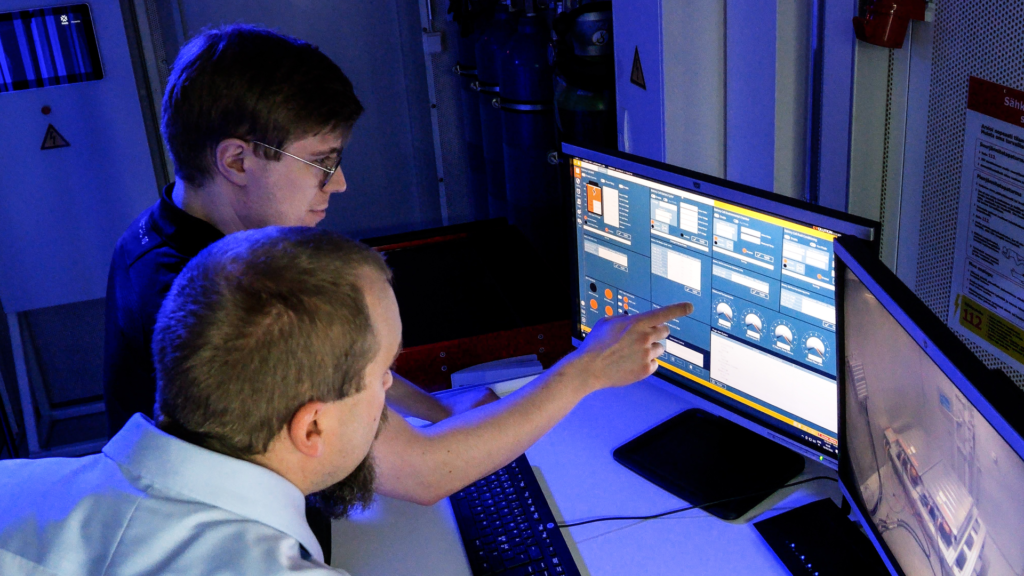
“Then there is our long history in testing off-highway powertrains,” Olli adds. “That testing heritage gives us a unique advantage. We can evaluate batteries, engines and complete hybrid powertrains under real operating conditions and compare different configurations before they go into production. That helps customers make decisions based on measured performance rather than assumptions.”
“What’s more, our solutions are modular and scalable to the specific weight, space and power, with a few battery chemistries to choose from,” says Jaakko.
They point out that Proventia has engine test cells with hundreds of thousands of hours of emission testing behind them.
“The facilities and know-how from off-highway technology is what sets us apart,” Olli says. “We are not just battery builders with some powertrain components to offer. Understanding the machine as a whole, not just the battery system, is what helps us create better solutions.”
5. What makes the team tick?
It’s clear the team enjoys solving problems and making electrification a reality. What motivates them to push the industry forward? Olli, for one, finds beauty in functional technology.
”It is satisfying to solve a real customer problem,” Olli says. “It is not just about engineering a solution. It is about making it meaningful for the customer and the end user.”
“In electrification and hybridization cases, I get to work with battery development, see how the product works in the machine, and get direct feedback,” says Jaakko. “The customer always comes with a clear goal: make it more cost-efficient and productive. Reaching that goal gives a real sense of accomplishment.”
What they all agree on is one thing: ”This is pretty cool work.”